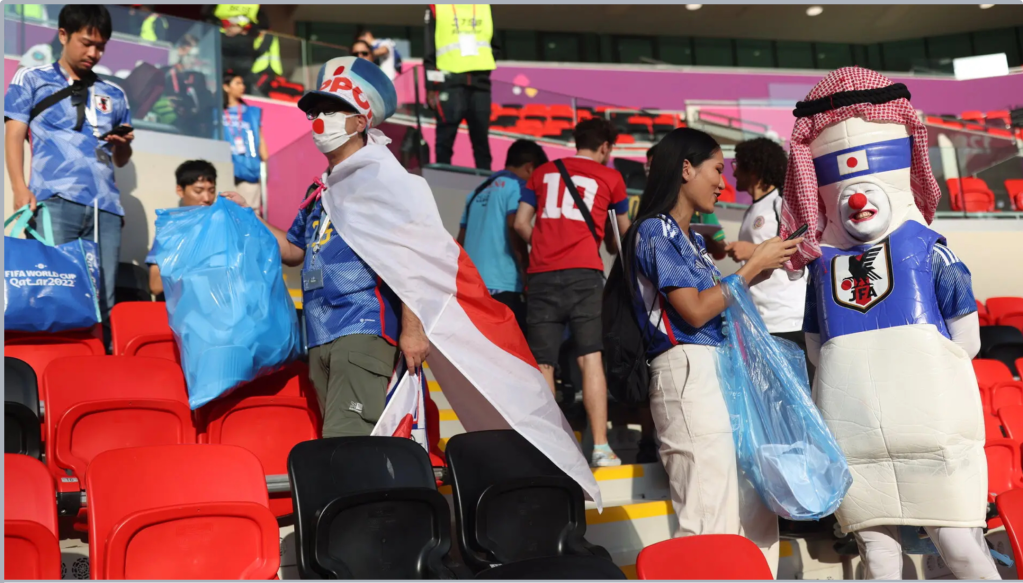
Football fans are not typically associated with prosocial behaviour, often conjuring images of hooliganism, ultras, and antisocial conduct. However, in March 2023, the FIFA World Cup 2022 witnessed a remarkable departure from these expectations as Japanese football enthusiasts gained global acclaim for spontaneously cleaning their stadium section post-matches. This unexpected display of altruism prompts an exploration into social psychology theories that underpin such actions.
Let’s delve into the theories that provide insight into this unusual prosocial practice.
“This analysis invites us to reconsider stereotypes and recognise the profound impact of collective identity and cultural norms on human behaviour.”
Shared Identity and Belonging:
Fans, driven by a sense of shared identity with fellow supporters, were possibly motivated to maintain a positive image of their in-group. This aligns with the concept of Social Identity Theory, where individuals seek to enhance their self-esteem through positive group affiliations. Cleaning the stadium becomes a collective effort to project a positive image of the fan community as a whole and avoiding the feeling of isolation if one did not partake.
Bystander Effect Reversal
In typical bystander effect situations, individuals might hesitate to act assuming someone else will take the initiative. However, in the case of the Japanese fans, the sheer size of the crowd may have had a reverse effect. The more fans present, the greater the collective responsibility felt by each individual, overcoming the diffusion of responsibility often associated with the bystander effect.
Unity in Cultural Values
Japanese culture places a high value on harmony, order, and collective responsibility. This cultural emphasis on maintaining a clean and orderly environment likely influenced the fans’ behaviour. The Cultural Influence Theory suggests that cultural norms deeply shape individuals’ actions, and in this case, the fans’ actions align with the cultural value of cleanliness.
This analysis invites us to reconsider stereotypes and recognise the profound impact of collective identity and cultural norms on human behaviour. Are there policies or interventions that sporting venues, clubs or national teams could put in place to encourage such behaviour? To turn the collective passion for the team into a force for good outside the game. Japan, at least, seems to have figured it out…
 The Athletic Mind
Leave a comment